


The Kitchen Renovation Buyer’s Guide: Getting Your Appliances Right the First Time

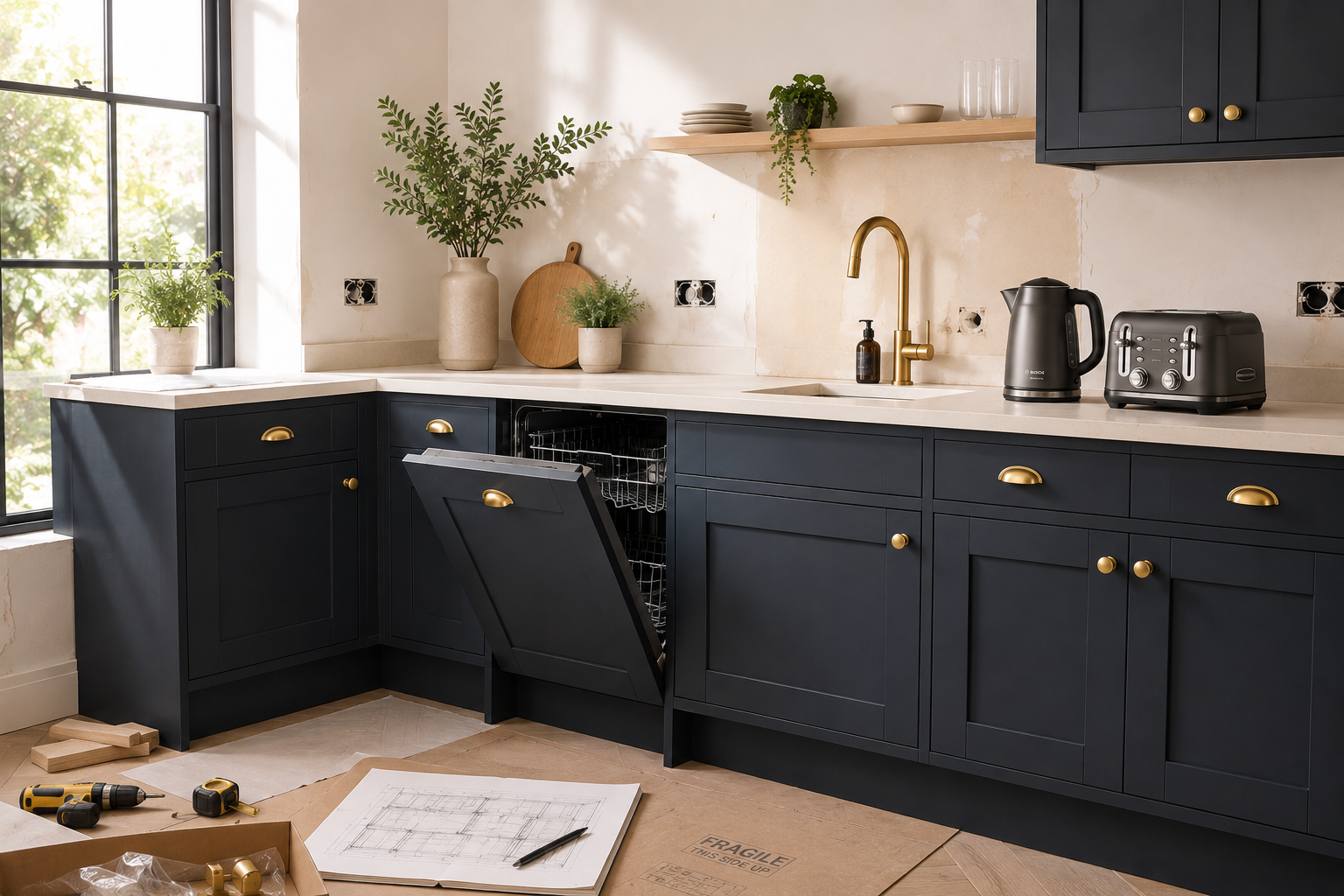
Installing a new kitchen is exciting, but many homeowners leave the appliances until last. Planning ahead and selecting appliances that fit well is easier and more cost-effective.
Start With Your Appliances
Planning a new kitchen involves more than slotting in a microwave or squeezing in a toaster on the countertop. Their dimensions, ventilation requirements, electrical connections and installation methods can all affect your kitchen design. Getting your appliance choices sorted early can save you from costly alterations later.
Before finalising your kitchen layout, decide which appliances you want (even just additional appliances like an air fryer or waffle maker can take up space) and where they will go. Also, think about your cooking habits and household size. Make a list of essential appliances first, then work out how they will fit into your planned kitchen.
This step is particularly important for integrated appliances, which are designed to fit behind matching cabinet fronts.
Double-Check the Measurements
Check the manufacturer's exact measurements, including height, width and depth and consider the space required for appliance doors to open properly.
Don't forget to account for pipes, cables, ventilation and the surrounding cabinetry. An integrated dishwasher, for example, needs to fit precisely within the cabinetry designed around it. The same applies to an integrated fridge, particularly when planning door clearances and ventilation. Small measurement differences can cause major problems once the kitchen is installed, because it's not easy to refit bespoke cabinetry.
Choose Your Oven and Hob Early On
Your cooking appliances can especially affect your kitchen layout. If you're choosing a built in oven, consider whether you want a single or double oven and whether it will sit beneath the worktop or at eye level. This information helps define your cabinetry specifications.
The same applies to your hob. An induction hob requires the correct electrical supply and sufficient space beneath it, particularly if you're planning to install drawers or an oven underneath.
Future-Proof Your Kitchen
Your kitchen design should work for you for years, so it's best to avoid choosing appliances purely because they fit the current design.
Consider energy efficiency, capacity, ease of use, maintenance and whether replacement parts are readily available. Choosing quality appliances at the planning stage can prevent issues later on.
FAQS
What should I check before buying appliances for my kitchen?
Every appliance has its own installation requirements. Before ordering appliances for your new kitchen, have a look at:
● Exact appliance dimensions
● Electrical requirements
● Water connections
● Ventilation requirements
● Door opening and clearance
● Cabinet compatibility
● Whether professional installation is required
Who should install my appliances?
It's a good idea to understand who is responsible for each connection, as you may need an electrician or kitchen fitter depending on the appliance. This is usually the case for larger appliances, stoves and ovens.
Why is planning ahead with kitchen appliances important?
If you choose and install your kitchen cabinetry first, you may find that the appliances you want don’t fit. For a kitchen to be functional, it should be more than beautiful; appliances make it efficient, so start by selecting them, then plan your cabinetry and overall design around them.
Get Your Appliance Plan Right First Time
The simplest way to avoid expensive mistakes is to choose your appliances before your kitchen is fitted.
At Walworth Appliances, we can help you select appliances that suit your kitchen, lifestyle and available space. We offer a range of options for every home and our experts can advise you so you can find the best solutions, ensuring your kitchen functions as it should.
August 28, 2026
|
View: 33
|
By: <a class="mp-info" href="https://walworthappliances.co.uk/blog/author/walworth-appliances.html">Walworth Appliances</a>
About the Author

Chest Freezers Vs Upright Freezers Vs Under Counter Freezers
November 24, 2025

The Correct Way to Stock Your Fridge
November 24, 2025

How To: Keep Ants Out Of Your Kitchen This Summer
November 24, 2025

Our Top Tips To Make Your Appliances Last Longer
November 24, 2025

Buying a Tumble Dryer
November 24, 2025




Common Dishwasher Problems and How to Avoid Them
April 23, 2026
